
The Foundation
Nutrition
Simple, sustainable supplementation built around traceable, organic ingredients — no fads, just habits that fit your lifestyle.
The minimum
What the research says is enough to start.
You don't need a perfect diet or a cupboard full of powders. Health organizations agree on a short list of basics. Here they are, in plain numbers.
400 g
of fruits and vegetables a day
That's about five handfuls spread across the day. The WHO sets 400 grams as the daily minimum for adults, and more is better.
Under 10%
of your calories from free sugars
For most adults that's about 50 grams, or 12 teaspoons, a day. Free sugars are the ones added to food and drinks, plus those in juice and syrups.
Under 5 g
of salt a day
That's about one teaspoon in total, counting the salt already in packaged and restaurant food.
Every meal
starts with a real protein food
The newest U.S. guidelines say to prioritize protein foods at every meal, eat vegetables and fruit through the day, and limit highly processed foods and added sugars.
: Dietary Guidelines for Americans, 2025–2030 (U.S. HHS and USDA)
The research
Why food comes first.
Supplements can fill gaps, but the research keeps pointing to the same place: what's on your plate does the heavy lifting.
More plants, lower risk
A review of long-term studies found that for every extra 200 grams of fruits and vegetables people ate each day, their risk of death from any cause was about 10 percent lower. The benefit kept growing up to around 800 grams a day.
Supplements are not a substitute for food
A large review done for the U.S. Preventive Services Task Force found that vitamin and mineral supplements had little or no benefit in preventing cancer, heart disease or death in healthy adults. There was a small benefit for cancer with multivitamins, and beta carotene raised lung cancer risk in people already at high risk. So we treat supplements as a way to fill gaps, not to replace meals.
: O'Connor et al., evidence report for the U.S. Preventive Services Task Force, JAMA (2022)
Nutrient gaps are common
In a national survey of nearly 16,000 Americans, many people fell short of the average requirement even after counting fortified foods and supplements: about 70 percent for vitamin D, 60 percent for vitamin E, 45 percent for magnesium, 38 percent for calcium and 34 percent for vitamin A. Supplements reduced the shortfall for every nutrient studied.
A healthy diet protects against disease
The WHO says healthy diets protect against malnutrition in all its forms and against noncommunicable diseases such as diabetes, heart disease, stroke and cancer. Its four principles are adequacy, balance, moderation and variety.
Protein and fewer processed foods
The 2025–2030 U.S. guidelines center on whole foods: protein at every meal, vegetables and fruit through the day, healthy fats and whole grains, with fewer highly processed foods and added sugars.
: Dietary Guidelines for Americans, 2025–2030 (U.S. HHS and USDA)
Example for beginners
An example first four weeks.
This is an example of what a beginner's first four weeks could look like, not a prescribed plan or clinical protocol. It builds toward the basics above one small change at a time. Adjust it to your life. Consistency matters more than speed.
Week 1
Add, don't subtract
Add one fruit or vegetable to two meals a day. Don't remove anything yet.
Week 2
Swap one drink
Replace one sugary drink a day with water or something unsweetened. Add a protein food to breakfast.
Week 3
Pick three go-to meals
Choose three easy meals you like that each include protein and a vegetable, so you always have an answer to 'what's for dinner?'
Week 4
Reach the minimum
Aim for about 400 grams of fruits and vegetables most days, and cut back one packaged snack. Then keep going.
Your first plate
A simple plate you can build tonight.
No counting or weighing. Build your plate in this order, and it will land close to the guidelines most of the time.
- 1
Fill half with color
Vegetables and fruit first: leafy greens, roasted vegetables, berries, whatever is in season.
- 2
Add a palm of protein
Fish, poultry, eggs, beans, lentils, tofu or lean meat. Aim for some at every meal.
- 3
Add a fist of whole grains
Oats, brown rice, quinoa, whole-grain bread or potatoes with the skin on.
- 4
Add a thumb of healthy fat
Olive oil, nuts, seeds or avocado.
- 5
Pour a glass of water
Make water or unsweetened tea your default drink and keep sugary drinks for treats.
How to use it
- Aim for different colors across the week. A variety of plants is part of the WHO's idea of a balanced diet.
- Cook once, eat twice. Make extra protein and chopped vegetables on a quiet evening and you've got the next two meals started.
- Read the label for added sugars and salt, especially on sauces, cereals and drinks, which are common places for them to hide.
- Keep it flexible. One plate that isn't perfect doesn't undo a week of good ones.
: WHO Healthy diet fact sheet · Dietary Guidelines for Americans, 2025–2030 (U.S. HHS and USDA)
Helpful tools
Products that can support your plate.
Food comes first, and the right products can help fill the gaps. Here are four examples from the brands we work with, and how each one can fit your routine. The best way to find what fits you is the starter assessment.
Multivitamin and mineral
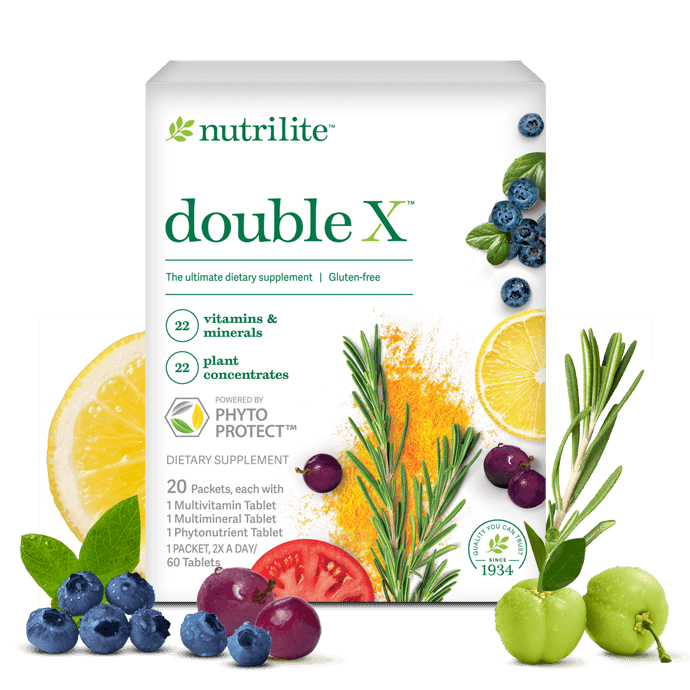
Nutrilite™ Double X™ Multivitamin
A daily multivitamin pack with over 40 nutrients, including vitamins, minerals and plant concentrates such as lutein, lycopene and quercetin. It's vegetarian, gluten free and lactose free.
- Over 40 nutrients, including vitamin D, B vitamins, calcium and magnesium
- Plant concentrates from tomato, marigold, berries and leafy greens
- Available in 10-day and 31-day supplies
How it can fit your routine
A daily multivitamin built to help cover your nutrient bases. National survey data show gaps in nutrients like vitamin D, magnesium and calcium are common, and supplements help narrow them. With over 40 nutrients plus plant concentrates, it's a simple foundation under your meals, especially on busy days. Studies in older adults have also reported fewer cancers among men and small improvements in thinking and memory.
: Fulgoni et al., The Journal of Nutrition (2011) · Gaziano et al., Physicians' Health Study II, JAMA (2012) · Baker et al., COSMOS-Mind, Alzheimer's & Dementia (2023) · O'Connor et al., evidence report for the U.S. Preventive Services Task Force, JAMA (2022)
Daily gummy multivitamins
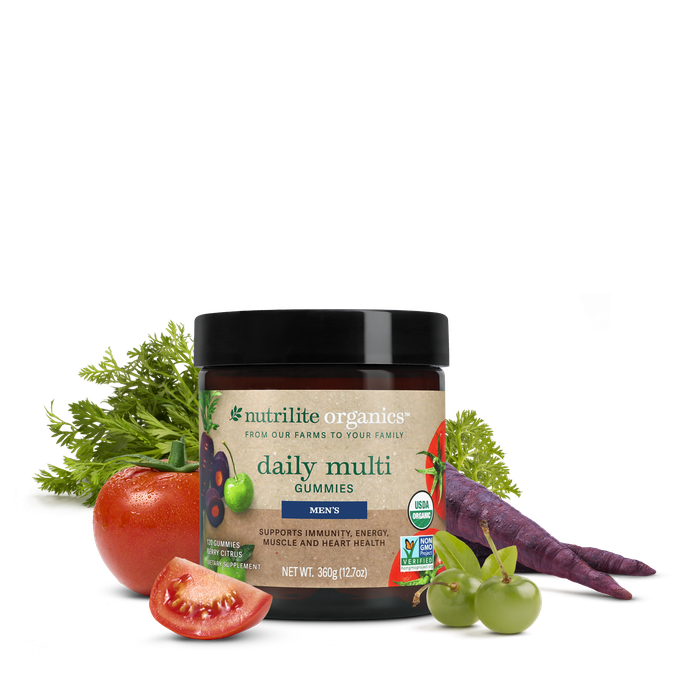
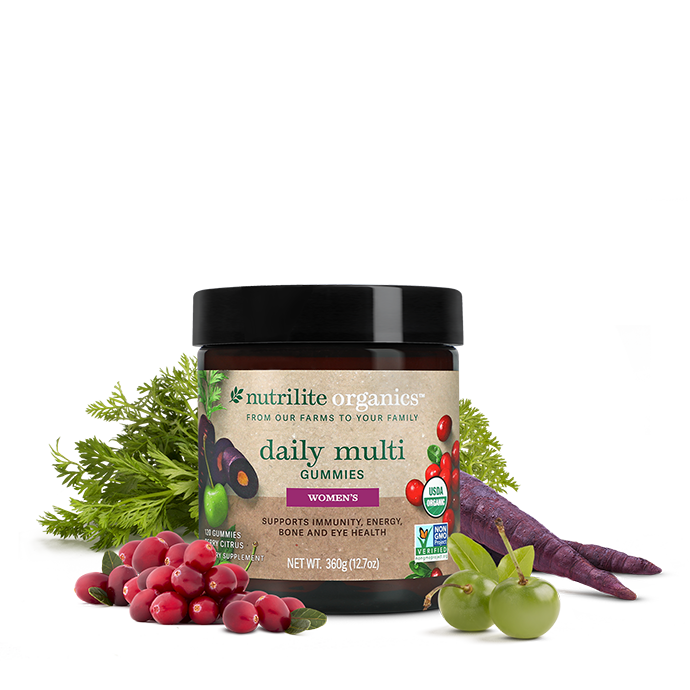
Nutrilite™ Organics Men's and Women's Daily Multi Gummies
Organic daily gummy multivitamins in one formula for men and one for women, each with 75 mg of organic plant nutrients from certified organic farms and partner farms. Both are vegetarian, gluten free, soy free and dairy free, with no artificial colors, flavors or preservatives.
- Men's: 13 vitamins and minerals, with organic tomato powder, acerola cherry and purple carrot
- Women's: vitamins and minerals including folate and vitamin K, with organic cranberry extract, acerola cherry and purple carrot
- 120 gummies per bottle, 30 servings each
How it can fit your routine
For anyone who finds pills a chore, a gummy turns a daily multivitamin into something to look forward to. Each formula is made for its own needs: the men's formula supports immunity, energy, muscle and heart health, and the women's supports immunity, energy, eye and bone health.† Pair either one with the plate habits above to cover your bases on busy days.
Plant-nutrient supplement
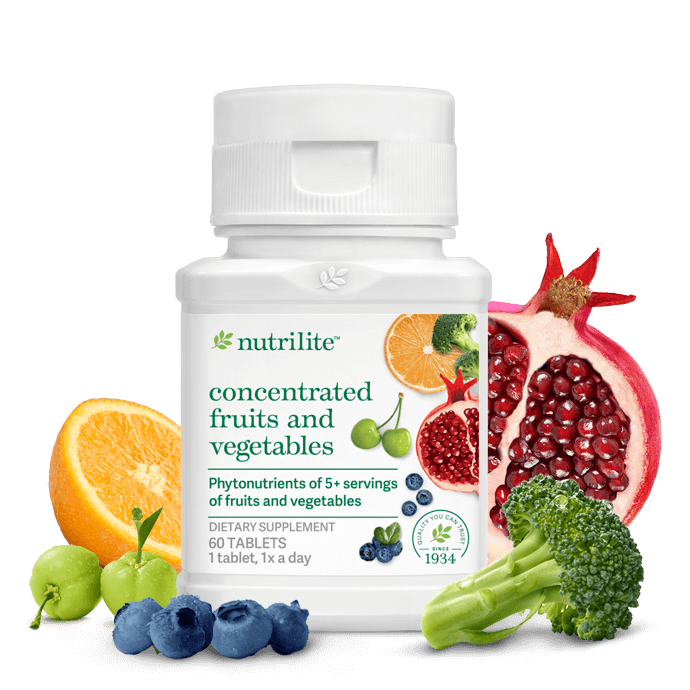
Nutrilite™ Concentrated Fruits and Vegetables
A once-a-day tablet made with plant nutrients from fruits and vegetables, including blueberry, pomegranate, broccoli, spinach and carrot, plus green tea, lutein and lycopene.
- 60 tablets per bottle
- Gluten free, no artificial flavors, colors or preservatives
How it can fit your routine
An easy daily habit that adds plant nutrients from blueberry, pomegranate, broccoli, spinach and carrot, plus green tea, lutein and lycopene. Take it alongside the fruits and vegetables on your plate as you build toward 400 grams a day.
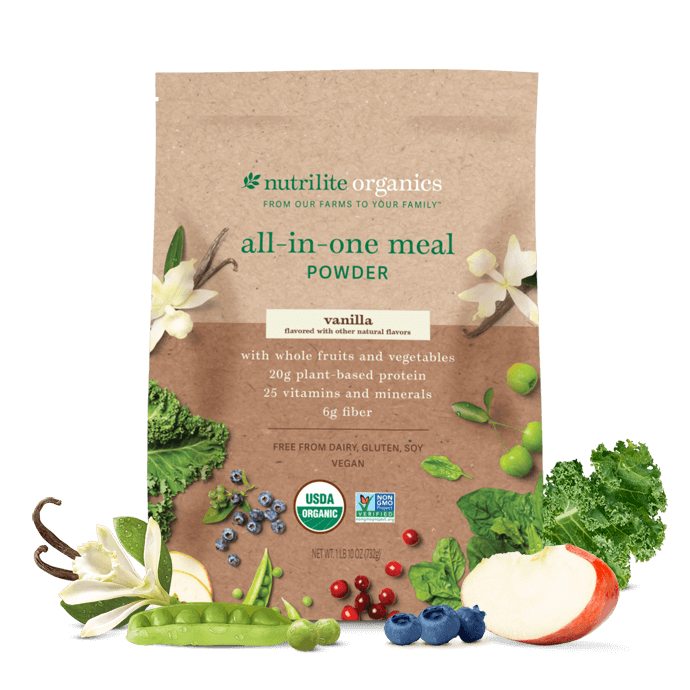
Meal replacement shake
Nutrilite™ Organics All-in-One Meal Powder
A USDA Organic, plant-based meal in a scoop, made with pea and rice protein, whole fruits and vegetables, and 25 vitamins and minerals. It's vegan, dairy free and gluten free.
- 20 g plant protein and 6 g fiber per serving
- 6 g added sugars
- 15 servings per pouch
How it can fit your routine
A convenient, balanced meal for busy mornings, travel days or whenever you need something fast. Each serving brings 20 g of plant protein, 6 g of fiber, whole fruits and vegetables and 25 vitamins and minerals, in line with the guidelines' focus on protein at meals.
: Dietary Guidelines for Americans, 2025–2030 (U.S. HHS and USDA)
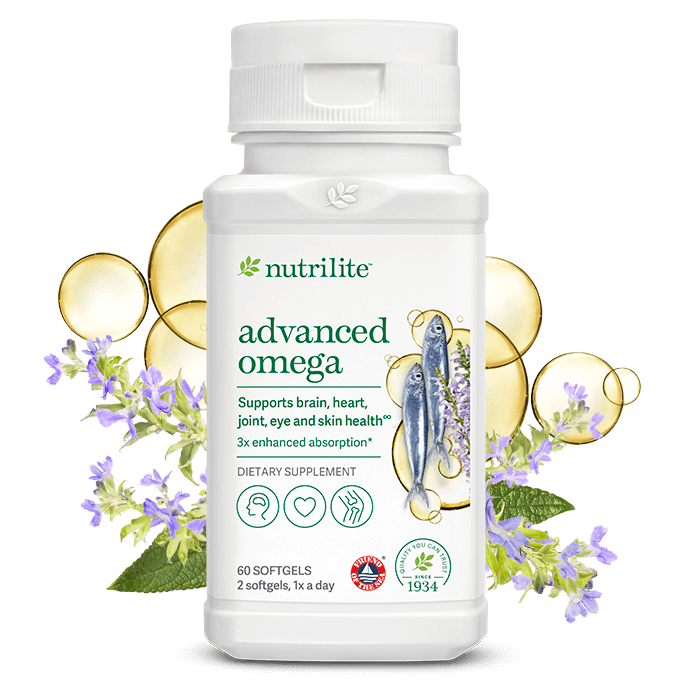
Omega-3 fish oil
Nutrilite™ Advanced Omega
Softgels made with fish oil from anchovy, mackerel and sardine, certified sustainable by Friend of the Sea, plus omega-3 ALA from white chia seed oil.
- 1,144 mg total omega-3, including 572 mg EPA and 428 mg DHA, per serving
- 60 softgels per bottle
How it can fit your routine
A convenient way to add EPA and DHA omega-3s to your day, especially if fish isn't on your menu often. Made with certified sustainable, wild-caught fish oil and chia seed ALA, and formulated for enhanced absorption and a reduced fishy aftertaste.
Facts come from the manufacturer's product labels. These statements have not been evaluated by the Food and Drug Administration. These products are not intended to diagnose, treat, cure or prevent any disease. Talk with your doctor before starting a supplement, especially if you have a health condition, take medication, or are pregnant or nursing.
Starter assessment
Make Nutrition fit your life.
Not sure where to start? Tell us where you are today with a few quick questions. Your answers come straight to us, and Levi will reach out personally to talk about what fits your life.
Common questions
Questions people ask before they start.
Do I need supplements?
For most healthy adults, food does the heavy lifting. Supplements can fill specific gaps, such as vitamin D or omega-3s, but they don't make up for a diet that's missing fruits, vegetables and protein. A personal conversation is the best way to find what you might actually need.
: O'Connor et al., evidence report for the U.S. Preventive Services Task Force, JAMA (2022) · Fulgoni et al., The Journal of Nutrition (2011)
Does it have to be organic?
No. The research on eating more fruits and vegetables doesn't depend on whether they're organic. Frozen and canned (rinsed) produce count too. Organic is a farming choice, and we care about knowing where ingredients come from, but eating more plants matters most.
How much is 400 grams?
Roughly five handfuls, or about a large apple, a cup of salad, half a cup of cooked vegetables, a small banana and a handful of berries, spread across the day.
I eat out a lot. Does that still work?
Yes. Choose a protein and a vegetable first, ask for dressings and sauces on the side, and drink water. Restaurant food is often high in salt and sugar, so keep a lookout there.
Read the research yourself.
- WHO Healthy diet fact sheet
- Dietary Guidelines for Americans, 2025–2030 (U.S. HHS and USDA)
- Aune et al., International Journal of Epidemiology (2017)
- O'Connor et al., evidence report for the U.S. Preventive Services Task Force, JAMA (2022)
- Fulgoni et al., The Journal of Nutrition (2011)
- Gaziano et al., Physicians' Health Study II, JAMA (2012)
- Baker et al., COSMOS-Mind, Alzheimer's & Dementia (2023)
Explore the other pillars.
Movement & Strength
Learn moreSleep & Recovery
Learn moreMindset
Learn more